You’ve just brought home a fluffy little tornado – and now you’re wondering what on earth you’re supposed to do with all that energy. Your puppy is zooming around the room, nipping at your ankles, and staring up at you with those big hopeful eyes. Sound familiar?
Here’s the thing: play isn’t just “fun” for puppies. It’s essential. The right kind of play helps your pup build confidence, develop social skills, burn off energy, and – this is the part most owners don’t realize – it’s actually one of the most powerful training tools you have.
In this guide, you’ll learn exactly how to play with a puppy in ways that are safe, mentally stimulating, and help shape a calm and well-behaved dog for life. Whether you’re wondering how to keep a puppy entertained during the day or how to amuse a puppy without losing your sanity. We’ve got you covered.
Quick Answer: How to Play With a Puppy
The best way to play with a puppy is to combine short, structured sessions of fetch, tug-of-war, hide-and-seek, and puzzle toys with basic training exercises.
Aim for 5-10 minute bursts of play, 3-5 times per day.
Always end on a calm note to teach your pup that playtime has rules – and that good things come to dogs who settle down.
Key principles: keep sessions short, rotate toys, use play as a reward, and avoid rough-housing that encourages biting.
Why Play Is So Important for Puppy Development
Before we dive into the “how,” let’s talk about the “why.” Puppies play for many of the same reasons human children do – it’s how they explore the world, learn boundaries, and build neural connections.
Here’s what play actually does for your puppy:
- Burns physical energy – reducing destructive behaviors like chewing and digging
- Stimulates the brain – preventing boredom-related anxiety
- Builds your bond – strengthening trust between you and your dog
- Teaches impulse control – especially when play has structure and rules
- Develops social skills – especially important during the critical 8-16 week socialization window
Common triggers that make puppies extra playful (and sometimes out of control) include the “zoomies” after waking up, meal-time excitement, and after being in a crate. Understanding these patterns helps you time play sessions for maximum benefit.
How to Play With a Puppy: Step-by-Step Guide
Ready to make playtime count? Follow these steps to build play sessions that entertain your puppy AND lay the groundwork for great behavior.
Step 1: Start With the Right Length of Play Session
Puppies have short attention spans and tire quickly — even if they don’t act like it! Overstimulation leads to bitey, cranky pups.
- 8-10 weeks old: 5-minute sessions, 4-5 times per day
- 3-4 months old: 10-minute sessions, 3-4 times per day
- 5-6 months old: 15-minute sessions, 3 times per day
Example: Set a timer on your phone. When it goes off, practice a quick “sit” or “settle” command before ending play. This teaches your pup that calm behavior is what gets the fun started – and that’s pure gold for training.
Step 2: Choose Age-Appropriate Games
Not all games are created equal. Here are the best ways to play with a puppy based on what actually develops great dogs:
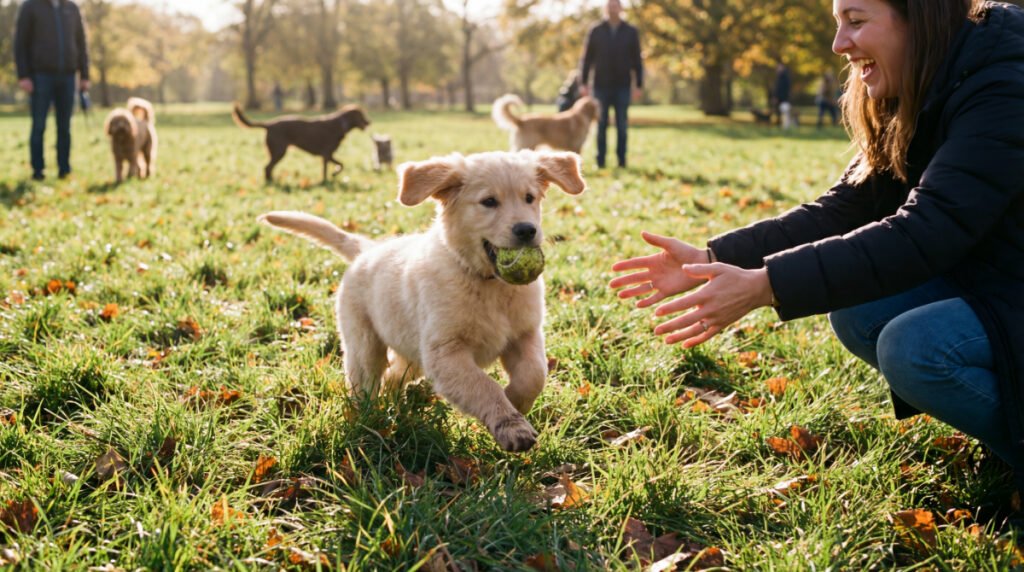
- Fetch (short distances): Great for energy release and teaching “drop it.” Start indoors with a soft toy.
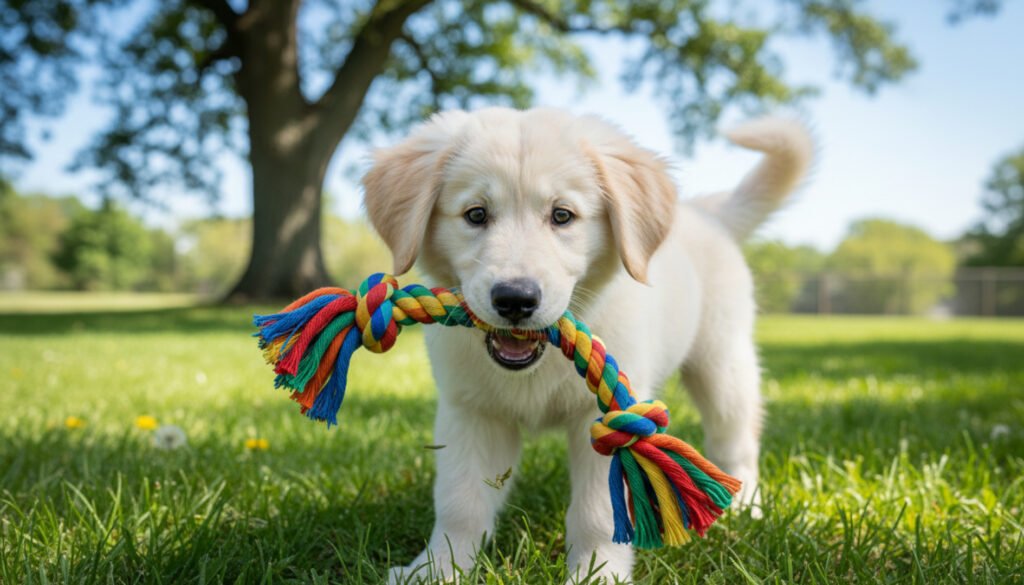
- Tug-of-War: Excellent for impulse control – but always teach “drop” before playing. You control when it starts and ends.
- Hide-and-Seek: Hides you or a toy to stimulate your pup’s nose and brain. Amazing for the “come” command!
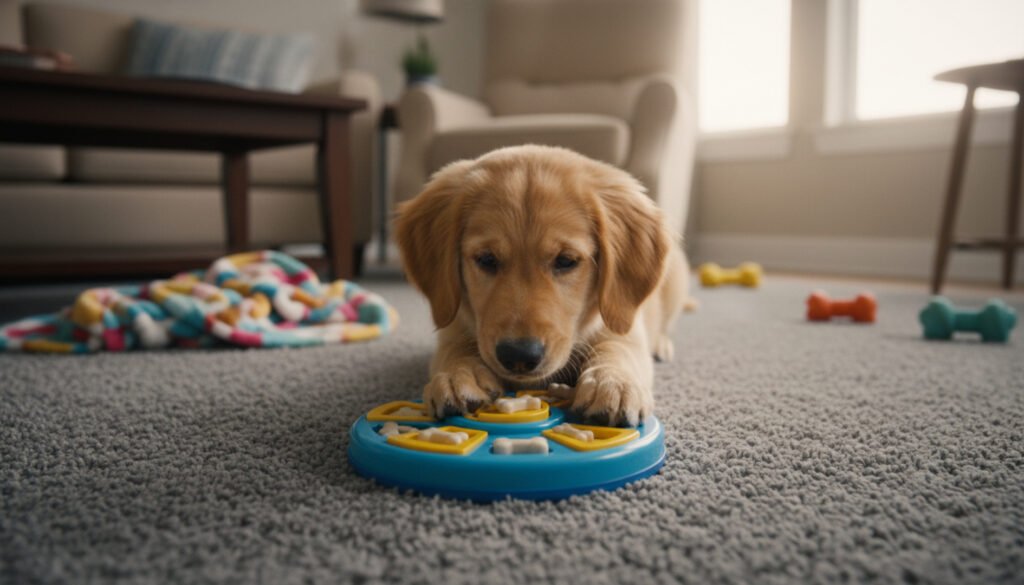
- Puzzle Toys & Kongs: Perfect for how to keep a puppy busy when you can’t give direct attention. Fill with kibble or peanut butter (xylitol-free!).
- Flirt Pole: Like a giant cat toy for dogs – great for high-energy breeds who need to chase.
- Sniff & Search Games: Scatter kibble in grass or hide treats under cups. Mental work is surprisingly tiring for pups!
Step 3: Use Play as a Training Tool
This is where smart puppy owners pull ahead. Instead of just playing and hoping for the best, weave in simple training moments:
- Ask for a “sit” before throwing the ball.
- Practice “leave it” by placing a toy on the floor and rewarding your pup for ignoring it.
- Use tug-of-war to reinforce “drop it” and “take it” commands.
- Practice “come” during hide-and-seek – every recall is a celebration!
The magic here? Your puppy doesn’t even know they’re being trained. To them, it’s all just play – but you’re building a foundation of reliable commands.
Step 4: How to Keep a Puppy Entertained When You’re Busy
Life doesn’t stop when you get a puppy (unfortunately!). Here’s how to keep a puppy busy and mentally satisfied during your work hours or errands:
- Frozen Kong or Licki Mat: Stuffed with wet food, banana, or plain yogurt. Freeze overnight for a 20–30 minute solo activity.
- Snuffle Mats: Let puppies forage for their kibble instead of eating from a bowl – engages their natural instincts.
- Safe Chew Toys: Bully sticks, Nylabones, or dental chews for supervised chewing sessions.
- Puppy-Proofed Playpen: Give your pup a safe space with rotating toys so everything feels new.
- Background Sounds: Some puppies settle better with calm music or TV on in the background.
Step 5: Always End Play Calmly
How you end a play session matters as much as how you start it. Always wind down with a calm activity — a short training exercise, a chew toy, or even just a gentle belly rub. This teaches your pup that the transition from “excited” to “calm” is normal and expected.
Pro tip: Never abruptly end play by putting your puppy away when they’re still in full “zoomie” mode – this can create crate anxiety. Instead, do a 2-minute cool-down first.
Mistakes That Make Puppy Playtime Worse (And How to Avoid Them)
Even well-meaning owners can accidentally create problem behaviors during play. Watch out for these common pitfalls:
❌ Allowing Biting “Because They’re Small”
That cute little nip today is tomorrow’s serious bite. Consistently redirect biting to a toy and say “ouch!” + pause play immediately every single time. Inconsistency here is the enemy.
❌ Wrestling and Rough-Housing With Your Hands
Using your hands as toys teaches puppies that hands = things to bite. Always use a toy as the intermediary in physical play. Your hands are for petting and feeding – not wrestling.
❌ Playing Until Your Puppy Crashes
“Tire them out” is a common strategy- but an overtired puppy is a bitey, reactive, and cranky puppy. More play isn’t always the answer. Rest and mental enrichment are just as important.
❌ Using Excitement to “Motivate” Your Puppy
Waving your arms, yelling, and getting hyper yourself can amp up your puppy to a point where they can’t think or respond to commands. Stay calm and upbeat – enthusiastic but not chaotic.
❌ Never Letting Them “Win”
Old-school dog training warned against letting dogs win tug-of-war. Modern research says otherwise — letting your pup win occasionally actually increases their confidence and enthusiasm for play (which is great for training!). Just keep control of when the game starts and ends.
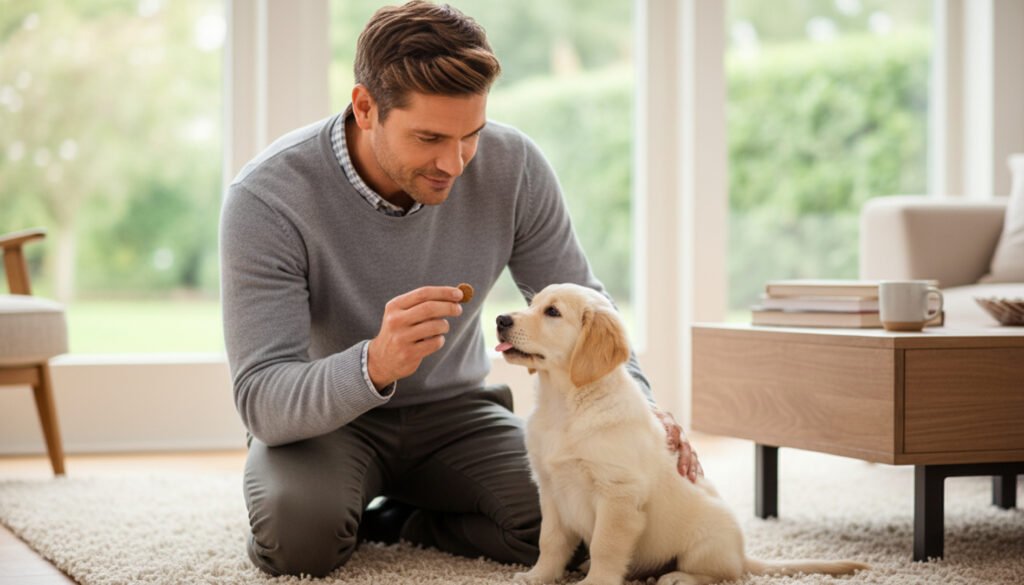
Want a Puppy That’s Easy to Play With? Start With Focus Training
Here’s a secret that professional service dog trainers know: the most fun and easy-to-play-with dogs aren’t just physically exercised — they’re mentally engaged and trained to pay attention to their owner.
When your puppy has even a basic level of focus training meaning they check in with you voluntarily, respond to their name, and understand the “game” is about working with you – playtime becomes ten times more enjoyable for both of you.
🐾 FREE RESOURCE: Learn How the Pros Train Service Dogs If you want to fast-track your puppy’s training using the same techniques that produce incredibly calm, well-behaved service dogs – check out the Free Online Dog Training Workshop from K9 Training Institute. In this free workshop, you’ll discover: Why most puppy training advice backfires – and what actually works. The “focus first” method used by professional service dog trainers. How to build a dog that checks in with you voluntarily – no nagging required. Simple daily exercises that produce real, lasting behavior changes It’s completely free and genuinely eye-opening.
Frequently Asked Questions About Playing With Puppies
How long should I play with my puppy each day?
Most puppies benefit from 3–5 play sessions per day, with each session lasting 5–15 minutes depending on age. Younger pups (8–10 weeks) need shorter, more frequent sessions. As your puppy grows, you can gradually increase duration. Remember: quality beats quantity. A focused 10-minute session is more valuable than an exhausting 45-minute free-for-all.
How do I know if my puppy is playing or being aggressive?
Playful puppies have loose, bouncy body language – a play bow (front down, bum up), exaggerated movements, and a relaxed face even if they’re being loud. Aggressive behavior looks tense: stiff body, hard stare, low growl that doesn’t stop, and hackles raised. If your puppy’s play ever feels too intense or scary, calmly end the session and consult a trainer.
What are the best toys to entertain a puppy?
The best toys for keeping a puppy entertained include: Kong Classic (stuffable), rope toys (for supervised tug), rubber chew toys, snuffle mats, treat-dispensing puzzle toys, and flirt poles for high-energy breeds. Rotate toys every few days so they always feel “new” – this is one of the easiest ways to amuse a puppy without buying new things constantly.
How do I stop my puppy from biting during play?
When your puppy bites during play, say “ouch!” in a firm but not scary voice and immediately stop all play for 30-60 seconds. Be 100% consistent – every time teeth touch skin, the fun stops. Redirect to a toy before resuming. Over 2-3 weeks of consistent redirection, most puppies significantly reduce biting. If it’s severe or doesn’t improve, a professional trainer can help.
Can puppies play with other dogs?
Yes – dog-to-dog play is incredibly beneficial for socialization, BUT it needs supervision, especially with puppies under 16 weeks. Choose calm, vaccinated adult dogs who are known to be gentle with puppies. Keep sessions short, watch for bullying or fear responses, and always give your puppy a safe “exit” they can use. Puppy classes are a great, controlled environment for this.
You’ve Got This – One Play Session at a Time
Learning how to play with a puppy the right way is genuinely one of the most impactful things you can do in your dog’s first year of life. It shapes their confidence, their social skills, their relationship with you, and their behavior for years to come.
The good news? You don’t have to get it perfect every time. Puppies are resilient and they want to connect with you. Short, consistent, and intentional play sessions — combined with a little structure and training — will get you further than you think, faster than you expect.
Start today. Put down your phone for 10 minutes, grab a toy, and play with your puppy. Watch how they light up. And remember: every moment of play is an investment in the calm, happy, well-behaved dog they’re becoming.
Happy training and happy playing! 🐾